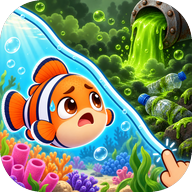
 Save the Fish
How long does trash last in the sea?
Every piece of trash in Save the Fish is real. Here is how long each one takes to break down in the sea, why it is harmful and what you can do, with the source of every number.
Breakdown times, longest first
The time shown is the lowest figure the source gives, so no item looks safer than it is. Tap an item for its full answer and source.
| Item | Time to break down | Material | Harm |
|---|---|---|---|
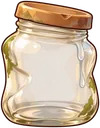 Glass jar | > 1,000,000 years | Glass | 5/10 |
 Tin foil | > 1,000 years | Aluminium | 6/10 |
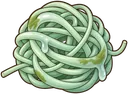 Fishing line | > 600 years | Plastic | 8/10 |
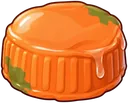 Bottle cap | > 500 years | Plastic | 8/10 |
 Toothbrush | > 500 years | Plastic | 6/10 |
 Plastic bottle | > 450 years | Plastic | 8/10 |
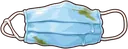 Face mask | > 450 years | Polypropylene, a plastic | 8/10 |
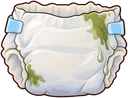 Disposable diaper | > 450 years | Plastic | 7/10 |
 Plastic cups and plates | > 450 years | Plastic | 7/10 |
 Plastic straw | > 200 years | Plastic | 8/10 |
 Plastic cutlery | > 200 years | Plastic | 7/10 |
 Cotton swab | > 200 years | A plastic stick with cotton tips | 7/10 |
 Aluminium can | > 200 years | Aluminium | 6/10 |
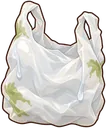 Plastic bag | > 100 years | Plastic | 8/10 |
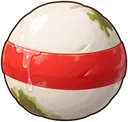 Foam buoy | > 80 years | Polystyrene foam (Styrofoam) | 7/10 |
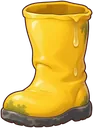 Rubber boot sole | > 50 years | Synthetic rubber | 5/10 |
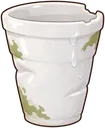 Foam cup | > 50 years | Polystyrene foam (Styrofoam) | 7/10 |
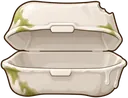 Foam food box | > 50 years | Polystyrene foam (Styrofoam) | 7/10 |
 Candy wrapper | > 20 years | Plastic and aluminium foil layers | 6/10 |
 Ice cream stick | > 13 years | Painted wood | 3/10 |
 Pencil | > 13 years | Painted wood, graphite and a metal band | 3/10 |
 Cigarette butt | > 10 years | Cellulose acetate, a plastic | 7/10 |
 Plywood | > 3 years | Wood (plywood with glue) | 3/10 |
 Balloon | many years | Latex rubber | 8/10 |
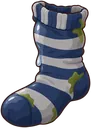 Wool sock | > 1 year | Wool | 3/10 |
 Wool glove | > 1 year | Wool | 2/10 |
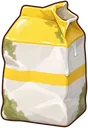 Milk carton | > 3 months | Paperboard with a wax coating | 1/10 |
 Newspaper | > 6 weeks | Paper | 1/10 |
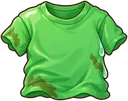 Cloth T-shirt | > 1 month | Cotton | 2/10 |
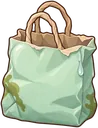 Paper bag | > 1 month | Paper | 1/10 |
 Cardboard box | > 2 weeks | Paper | 0/10 |
Most harmful to the sea
Ranked by the game's harm score, which adds up three things:
- Lasts: how long it stays in the water (0 to 4)
- Toxic: what it leaks into the water (0 to 3)
- Wildlife: how often animals swallow it or get tangled in it (0 to 3)
Lasts scores 0 under six months, 1 under two years, 2 under twenty years, 3 under a hundred years and 4 for a hundred years or more. This score is our own simple scale for comparing items in the game. It is not an official index.
Fishing line> 600 years02Bottle cap> 500 years03Plastic bottle> 450 years04Face mask> 450 years05Plastic straw> 200 years06Plastic bag> 100 years07Balloonmany years08Disposable diaper> 450 years09Plastic cups and plates> 450 years10Plastic cutlery> 200 years11Cotton swab> 200 years12Foam buoy> 80 yearsQuestions and answers about trash in the sea
Breakdown times
Which trash lasts longest in the sea?
On our list, Glass jar lasts longest: > 1,000,000 years. Next come Tin foil (> 1,000 years) and Fishing line (> 600 years).
Which trash breaks down fastest in the sea?
On our list, Cardboard box breaks down fastest: > 2 weeks. Next come Paper bag (> 1 month) and Cloth T-shirt (> 1 month). Even these can harm sea life while they last.
How long does a plastic bottle take to break down in the ocean?
> 450 years, according to Florida Department of Environmental Protection (Northwest District), information sourced from the US Environmental Protection Agency Gulf of Mexico Program. Like other plastics, it never truly vanishes: it breaks into smaller and smaller microplastics. The cap lasts even longer on our list: > 500 years.
How long does a plastic bag last in the sea?
> 100 years. European Commission, Speech Repository gives a range, and we show its lowest figure. A floating bag looks like a jellyfish, so sea turtles swallow it.
How long does fishing line last in the ocean?
> 600 years, the longest of any plastic item on our list. Lost line keeps catching animals for years, which is why it gets the top wildlife mark (3 of 3) on our scale.
How long do cigarette butts take to break down?
> 10 years (U.S. National Park Service, First State National Historical Park (Junior Ranger Online)). The filter looks like cotton but is a plastic, cellulose acetate, and it leaks toxic chemicals into the water the whole time. It gets the top toxicity mark (3 of 3) on our scale.
How long does an aluminium can last in the sea?
> 200 years (Florida Department of Environmental Protection (Northwest District), information sourced from the US Environmental Protection Agency Gulf of Mexico Program). Aluminium leaks little poison, but torn cans and openings can cut or trap small animals.
How long does glass take to break down?
> 1,000,000 years (U.S. National Park Service, First State National Historical Park (Junior Ranger Online)). Glass is made from minerals and does not poison the water, but it hardly breaks down at all, and broken glass is sharp.
How long does a styrofoam cup last in the ocean?
> 50 years (Florida Department of Environmental Protection (Northwest District), information sourced from the US Environmental Protection Agency Gulf of Mexico Program). Foam crumbles into small white beads that birds and fish mistake for food. A foam box lasts > 50 years and a foam buoy > 80 years.
How long does a disposable face mask last?
> 450 years, from Ville d'Osny (French municipal government). Disposable masks are made of polypropylene, a plastic, and their ear loops can tangle birds and other animals.
How long does a disposable diaper take to decompose?
> 450 years (Florida Department of Environmental Protection (Northwest District), information sourced from the US Environmental Protection Agency Gulf of Mexico Program). Disposable diapers contain plastic layers and absorbent gel, so they last for many human lifetimes.
How long does a plastic straw last?
> 200 years (U.S. National Park Service, First State National Historical Park (Junior Ranger Online)). Straws are so light that wind and rain carry them to rivers and the sea, where they break into microplastics.
How long does a balloon last in the sea?
NOAA Marine Debris Program blog (US National Oceanic and Atmospheric Administration) says balloons can last for years, without a single number, so we write “many years” instead of inventing one. Animals can mistake balloon pieces for food, and ribbons can wrap around them.
How long does paper take to break down in water?
Paper goes fast: Newspaper (> 6 weeks), Cardboard box (> 2 weeks), Paper bag (> 1 month). Inks, glue and wax coatings still pollute while it happens.
How long do clothes last in the sea?
Natural fibres rot fairly fast: Cloth T-shirt (> 1 month), Wool sock (> 1 year), Wool glove (> 1 year). Clothes made of polyester or nylon are plastic and shed tiny fibres with every wash.
How many kinds of trash last more than 100 years?
14 of the 31 items on our list last more than 100 years, and 2 of them more than 1,000 years.
Which trash breaks down in less than a year?
On our list: Milk carton, Newspaper, Cloth T-shirt, Paper bag, Cardboard box. Even these can harm animals while they float, and their inks and coatings stay behind.
What does the “>” sign before the times mean?
It means “more than”. When a source gives a range, we show its lowest figure with “>”, so no item looks safer than the source says. Each item's page shows the full range, the source's own words and a link to it.
Does trash break down more slowly in the deep sea?
Usually, yes. Breakdown needs sunlight, warmth and microbes, and the deep sea is dark and cold, so trash that sinks can last longer than the times on most charts. Those times are estimates for typical conditions.
Are the times the same in rivers and lakes?
Roughly, but not exactly: fresh water, temperature and sunlight change how fast things break down. Most trash in the sea came down a river first, so keeping rivers clean protects the ocean too.
Why do different sources give different times?
Breakdown depends on sunlight, temperature, oxygen and microbes, so the same item lasts longer in cold, dark water than on a sunny beach. Most figures come from educational charts, not exact lab measurements. We show the lowest figure each source gives, with a “>” sign, so nothing looks safer than it is.
Comparisons
Which is worse for the sea, a plastic bag or a paper bag?
In the sea, the plastic bag: it lasts > 100 years and scores 8/10 on our scale, while a paper bag breaks down in > 1 month and scores 1/10. Paper bags take more resources to make, though, so the best bag is one you reuse many times.
Glass, aluminium or plastic: which bottle is worst for the ocean?
A plastic bottle lasts > 450 years and breaks into microplastics (score 8/10). A can lasts > 200 years (score 6/10). A glass jar lasts > 1,000,000 years but is not toxic (score 5/10). A refillable bottle beats all three.
Is a foam cup worse than a paper carton?
Yes. A foam cup lasts > 50 years (score 7/10) and crumbles into beads animals swallow; a milk carton breaks down in > 3 months (score 1/10).
Are wooden sticks better than plastic ones?
For the sea, yes. A painted ice cream stick lasts > 13 years and a pencil > 13 years, while a plastic fork lasts > 200 years. Wood can still carry paint and glue, but it does not turn into microplastics.
Why does glass score lower than plastic if it lasts longer?
Because the score is more than time. Glass gets 4 of 4 for lasting, but 0 of 3 for toxicity and 1 of 3 for harm to wildlife. A plastic bottle gets 4 for lasting, 2 for toxicity and 2 for wildlife, because it breaks into microplastics that animals swallow.
Is rubber trash harmful in the sea?
Yes. A rubber boot lasts > 50 years, and rubber wears into small particles and releases chemicals, so it gets 2 of 3 for toxicity on our scale.
Harm to sea life
Which trash is most dangerous for sea animals?
Above all the items animals swallow or get tangled in: Fishing line, Face mask, Balloon. Fishing line and balloon ribbons wrap around fins, flippers and beaks, and turtles mistake plastic bags for jellyfish.
Why do sea turtles eat plastic bags?
NOAA's Marine Debris Program explains that a floating bag looks like a jellyfish, a favourite food of sea turtles, and is often swallowed before the turtle knows the difference. Plastic cannot be digested: it can block the gut and make an animal feel full while it starves.
How does fishing line hurt animals?
It wraps around fins, flippers, wings and beaks and cuts deeper as the animal swims or grows. Fishing line lasts > 600 years, so one lost line can catch animal after animal.
Are balloons dangerous to sea animals?
Yes. NOAA Marine Debris Program blog (US National Oceanic and Atmospheric Administration) warns that animals can mistake balloons for food, and that swallowing them can lead to internal injury, starvation and death. Balloon ribbons are strings that can also wrap around animals, and a released balloon always comes down somewhere, often in the sea.
Are disposable face masks harmful to wildlife?
A disposable mask is made of polypropylene, a plastic that lasts > 450 years, and its elastic ear loops can tangle birds and other animals. Cut the loops and put used masks in a closed bin.
Is styrofoam toxic to sea life?
Polystyrene foam breaks into small beads very easily. Animals swallow them, and like other plastics they can carry chemicals. On our scale foam gets 2 of 3 for toxicity.
Which trash is the most toxic?
On our scale, Cigarette butt is the only item with the top toxicity mark, because its filter leaks nicotine and heavy metals. 12 more items get 2 of 3, mostly plastics, foam and rubber.
Can plastic make corals sick?
Yes. A study of 159 reefs in the Asia-Pacific found that the chance of disease rose from about 4% to 89% when corals were in contact with plastic (Lamb et al., Science, 2018). Plastic scratches corals, blocks light and can carry germs.
Do microplastics end up in our food?
Microplastics have been found in seafood, sea salt and drinking water. Scientists are still studying what they do to human health, but keeping plastic out of the sea is the surest way to keep it off our plates.
Which animals are hurt most by ocean trash?
Sea turtles, seabirds, seals, whales and fish. They swallow trash they mistake for food or get tangled in lines and nets. On our list, the items with the top wildlife mark are Fishing line, Face mask, Balloon.
Are cigarette butts toxic to sea life?
Yes. The filter is a plastic (cellulose acetate) that leaks nicotine, arsenic and heavy metals. In a lab study, the leachate of about one smoked butt per litre of water killed half of the test fish within 96 hours (Slaughter et al., Tobacco Control, 2011).
How is the harm score calculated?
It adds three parts: how long the item lasts (0 to 4), how toxic it is (0 to 3) and how much it harms wildlife (0 to 3), for at most 10. It is the game's own scale for comparing items, not an official index.
Plastic and microplastics
Does plastic ever disappear in the sea?
Not really. Sunlight and waves break plastic into smaller and smaller pieces called microplastics, and NOAA says plastic may never fully go away. The times for plastic items are estimates of when they fall apart, not of when they are gone.
What are microplastics?
NOAA's National Ocean Service defines microplastics as plastic pieces less than five millimetres long. They come from bigger trash breaking apart and from things like synthetic fibres, and fish, seabirds and other animals swallow them.
Where does ocean trash come from?
Most of it starts on land: litter, overflowing bins and badly managed dumps, carried by wind, rain and rivers. Ships and fishing add lost nets, lines and buoys.
Is biodegradable plastic better for the sea?
Not much. The UN Environment Programme's 2015 report on biodegradable plastics found that many need the heat of industrial composting, above 50 °C, which the sea almost never reaches, and that switching to them would not significantly reduce the plastic entering the ocean.
What is the Great Pacific Garbage Patch?
Not a floating island of trash. NOAA describes garbage patches as areas where ocean currents collect debris, mostly tiny pieces of microplastic spread through the water, more like pepper flakes in a soup than something you can skim off.
Can microplastics be cleaned out of the ocean?
Hardly. They are too small and spread too widely to filter out, so the real fix is stopping bigger trash before it reaches the sea and breaks apart.
Is paper or cardboard trash harmless?
It breaks down in weeks or months, but inks and wax coatings still pollute, and a soggy bag can smother small animals for a while. Paper is better recycled than thrown away.
Are natural materials like wool, cotton and wood safe in the sea?
They rot much faster than plastic, but dyes, paint, glue and wood treatments leach into the water, and loose cloth can snag animals.
Is glass bad for the ocean?
Glass does not poison the water, but it never really breaks down: the US National Park Service says a glass jar can take a million years. Broken glass cuts animals and people.
What you can do
What can I do to keep trash out of the sea?
Refuse single-use plastic when you can, carry a bottle and a cloth bag, put litter in a closed bin, never flush cotton swabs or wipes, take fishing line home, and join a beach or river clean-up.
How should I throw away cotton swabs, masks and wet wipes?
In a closed bin, never the toilet. Flushed swabs and wipes can slip through sewage plants and reach rivers and the sea. Cut the ear loops of masks first.
What should I do with old fishing line?
Take it home, cut it into short pieces and put it in the bin, or use a fishing line recycling bin if your harbour or tackle shop has one. Never leave it on rocks or piers.
How can I join or start a beach clean-up?
Look for a local group or a clean-up day such as the International Coastal Cleanup each September. Wear gloves, leave needles and other dangerous items to the organisers, and count what you find: those counts help scientists.
Does picking up one piece of litter really help?
Yes. Every item you pick up can no longer hurt an animal or break into microplastics. A bottle cap removed today is one less piece of plastic in the sea for > 500 years.
How can children learn about ocean trash?
By seeing it and doing something about it: a walk on the beach with an adult, sorting the rubbish at home, and asking where each item goes after the bin.
How can I cut my own plastic waste?
Carry a reusable bottle, cup and bag; say no to straws and plastic cutlery you do not need; choose products with less packaging; and repair or pass on things instead of throwing them away.
About this data
Where do these numbers come from?
From 13 public sources, mostly government and education bodies: the US EPA Gulf of Mexico Program, NOAA, the US National Park Service, the European Commission, the UK government and others. Each item's page names its source, quotes it and links to it.
Can I download this data?
Yes. The full table with times, materials, harm scores and sources is on code4ocean.com as JSON and CSV. Each row names and links the original source, so please quote that source when you use a figure.
Why are some items, like crisp packets, missing?
We add an item only when a public source gives a figure we can quote and link. When we find one, the item joins this guide and the game.
Who made this guide?
The team behind Save the Fish, a mobile puzzle game from the Code4Ocean studio. We make games, we are not scientists, so every figure links to the public source it comes from.
Why does a game teach this?
In Save the Fish you draw bubble walls to stop these items from falling on fish and corals. The game also shows a real fact about one of them, with its source, so players learn while they play.
Where do these numbers come from?
- Marine Debris Timeline of Biodegradation – Florida Department of Environmental Protection (Northwest District), information sourced from the US Environmental Protection Agency Gulf of Mexico Program
- Do I Recycle or Upcycle? – U.S. National Park Service, First State National Historical Park (Junior Ranger Online)
- Plastic – NOAA Marine Debris Program
- Environmental Stewardship (Trash Timeline resource sheet) – Every Kid Outdoors, U.S. federal interagency program (lesson made with Scholastic)
- Toxicity of cigarette butts, and their chemical components, to marine and freshwater fish (Slaughter E, Gersberg RM, Watanabe K, Rudolph J, Stransky C, Novotny TE) – Tobacco Control (BMJ), 2011;20(Suppl 1):i25-i29, doi:10.1136/tc.2010.040170, via PubMed Central (NIH)
- Marine Debris: Plastics – NOAA National Ocean Service, Coastal Tutorial
- Marine Debris Prevention: decomposition key – Aquarium of the Bay (San Francisco)
- Plastic Bag Free Day – European Commission, Speech Repository
- England to ban single-use plastic cutlery, plates and trays – Mother Jones (republishing The Guardian), quoting the UK Environment Secretary
- Decomposition Rates card – Canadian Geographic Education (figures credited to NOAA, US EPA and Woods Hole Sea Grant)
- Masques jetables : dans la poubelle uniquement ! – Ville d'Osny (French municipal government)
- Gove takes action to ban plastic straws, stirrers, and cotton buds – UK Government, Department for Environment, Food & Rural Affairs (GOV.UK)
- The Scary Truth About Party Balloons – NOAA Marine Debris Program blog (US National Oceanic and Atmospheric Administration)
Protect the fish from it, in the game
In Save the Fish you draw bubble walls to stop this trash from hurting fish and corals.
Coming soon to Google Play and the App Store